Farnborough, UK – At Farnborough International Airshow, governors from Virginia and Arkansas highlighted a common formula for aerospace and defense growth: strong workforce pipelines, veteran talent, public-private partnerships, and state-level investments that help companies scale faster and compete globally.
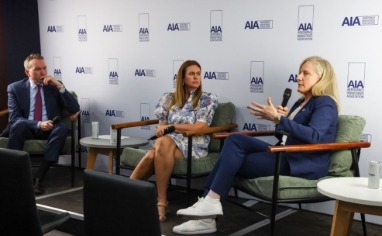
In a fireside chat hosted and moderated by Aerospace Industries Association President and CEO Eric Fanning, Governor Sarah Huckabee Sanders of Arkansas and Governor Abigail Spanberger of Virginia discussed how states can partner with industry, educational institutions, and local communities to build the workforce, infrastructure, and business environment needed to support continued aerospace and defense growth.
1. States are treating aerospace and defense as a cornerstone of economic growth and national security.
Both Governor Sanders and Governor Spanberger highlighted aerospace and defense as strategic industries that create high-quality jobs, strengthen local economies, and contribute directly to America’s security. Both states are actively competing to attract new investment while supporting the growth of existing aerospace and defense companies.
“Our number one export is aerospace and defense,” Governor Sanders said. “We love that we get to say that we’re playing a part in the protection and the defense of our country.”
“It’s really important to Virginia that we have continued growth in the aerospace and defense sectors,” Governor Spanberger said. “We have long been a place where defense-oriented, aerospace-oriented, and space-oriented companies endeavor to grow, and we want to make sure that as we’re looking toward the future, we don’t get complacent.”
2. Workforce development starts long before hiring—and requires a full education-to-career pipeline.
Both governors stressed the importance of building talent pipelines from K-12 education through higher education, technical training, apprenticeships, internships, and career-transition programs. States are aligning education systems with industry demand to ensure students graduate with skills that lead directly to high-growth, high-wage careers.
“We know if we’re starting when they’re seniors in high school, you’ve already lost,” Governor Sanders said. “We want them either to be enrolled, enlisted, or employed.”
“We have really put a prioritization on workforce training and apprenticeship programs,” Governor Spanberger said. “We are working directly with employers to ensure they have access to the talent pool and can engage directly with our universities and training programs to get the talent they need.”
3. Veterans are a critical source of aerospace and defense talent.
Virginia and Arkansas pointed to former servicemembers as a uniquely valuable workforce for the industry, bringing mission-focused experience, technical skills, and leadership. Programs designed to help veterans transition into civilian careers are helping aerospace and defense employers meet workforce needs while providing veterans with clear pathways to opportunity.
“These are industries where people who have been mission-oriented in their military service can continue that mission-oriented work in the defense sector and aerospace industries,” Governor Spanberger said. “Ensuring companies understand the workforce that we bring to bear is a clear priority for our Commonwealth.”
“We want Arkansas to be the best place in the country for a veteran to live after their service is completed, helping them transition from military service to civilian service and ensuring they have a job when that training is finished,” Governor Sanders said.
4. Strong public-private partnerships are essential to closing workforce gaps.
The governors emphasized that workforce challenges cannot be solved by government, industry, or educational institutions acting alone. Successful models involve employers working directly with states, universities, community colleges, and training providers to shape curricula, expand internships and apprenticeships, and prepare workers for the jobs companies are creating today and will need tomorrow.
“Having a great partnership from start to finish and throughout the entire process really makes a big difference,” Governor Sanders said. “If we’re encouraging students to go one path and there are no jobs on the other side, then we’ve both wasted our time.”
“Let us be the conduit to bring people together,” Governor Spanberger said. “Once we understand the workforce needs that industry is identifying, we can work together with our universities, our local partners, and employers to figure out how to make that happen.”
5. Speed, coordination, and quality of life are becoming competitive advantages in attracting investment.
Beyond incentives, states are focusing on site readiness, streamlined permitting, workforce training, housing, childcare, and other factors that help companies grow and workers thrive. The governors described a more coordinated approach to economic development—one that removes barriers to investment while creating the conditions needed for a strong, sustainable workforce.
“It’s my job to make it easier for a company to operate in my state, not harder,” Governor Sanders said. “We say we’re open for business, but we’re proving it day in and day out by creating an environment where a company wants to be.”
“Speed matters. We’ve invested hundreds of millions of dollars to make sure site readiness is a priority and that when companies are ready to put the shovel in the ground, we’ve already cleared the path as much as possible,” Governor Spanberger said.
To view a recording of the event, please click here.
To learn more about how the aerospace and defense industry supports American economic prosperity, please click here for AIA’s 2026 Facts and Figures report.
###